





Texas Fertilizer Plant Explosion Raises Questions About Planning and Zoning

April 19th, 2013

Author: David Willauer, Transportation Manager, IEM

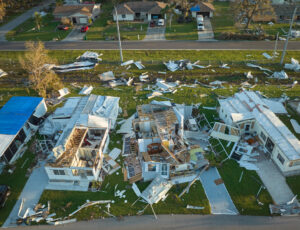
The explosion at the West Fertilizer plant in West, Texas, this week serves as a sobering reminder of the role of planning and zoning for facilities near chemical plants. Why were a middle school and a nursing home located so close to a fertilizer plant that stores and uses dangerous chemicals, such as anhydrous ammonia?

West Texas Fertilizer plant - buildings near explosion

Source: http://usnews.nbcnews.com/_news/2013/04/17/17800341-texas-town-a-disaster-blast-may-have-killed-15-injured-160?lite

Planning and zoning officials often do not have critical information such as downwind hazard zones or isolation protective action distances during the planning board process. As a result, schools, nursing homes, residential subdivisions, and child care facilities are often built too close to chemical facilities with downwind hazard zones or too close to highways and railroads transporting chemicals with known recommended isolation protective action distances.

IEM is working with local officials and industries in several states to gather real data about hazardous materials storage and transport and to translate that into actionable intelligence that helps planning officials make more informed zoning and facility siting decisions. This process is also building stronger bonds between industry, communities, and local officials as they collaborate more closely to improve public protection.

For details about the explosion, see Explosion hits fertilizer plant north of Waco, Texas.


NC Rail Hazmat Incident Could Have Been in Your Backyard

February 5th, 2013
Overturned rail tanks cars in Bladensboro, NC, some of which contained hazardous materials.

Overturned rail tanks cars in Bladensboro, NC, some of which contained hazardous materials.

Author: David Willauer, Transportation Manager, IEM

It is still not known why nine rail cars in a 109-car train derailed from the CSX tracks in downtown Bladensboro, NC on this past weekend. Four of the derailed cars were listed as containing hazardous materials, and one of them was full of anhydrous ammonia (NH3), a toxic inhalation hazard.[1] This dense gas, when released, is heavier than air, and can seep into the ground. Emergency responders evacuated 300 people to an elementary school shelter.

We modeled this incident using data from that day’s weather and determined that 518 people lived in the “red zone” (see map below) downwind of the incident and could have potentially been impacted if that rail tank car of NH3 was compromised.

Plume model illustrates “red zone” and downwind areas to be evacuated if necessary.

Plume model illustrates “red zone” and downwind areas to be evacuated if necessary.

Late last year we described another hazmat rail incident in Paulsboro, NJ involving vinyl chloride spilling into a tributary of the Delaware River (NJ Train Derailment Begs Us to Ask: Do You Know What Is Transported Through Your Back Yard?). These incidents serve as an important reminder to emergency managers to learn what is being transported “through their backyard” and to work with freight railroads to learn about the challenges surrounding hazmat rail incidents.  Since railroads connect urban areas across the county, hazmat rail incidents can affect populated areas. Often railroad incidents occur in remote areas or areas not served by highways and pose unique challenges for the response and clean up.

North Carolina ranks third in the nation for chemical production.[2]  Anhydrous ammonia is one of the top hazardous chemicals transported in North Carolina, used primarily in the production of fertilizers.[3]

IEM helps emergency managers identify the most hazardous chemicals stored in, or transported to, their counties to be prepared in the event of one of these low-probability/high consequence incidents.

Sources

http://triangle.news14.com/content/top_stories/685664/small-police-force-responds-to-big-emergency-at-bladenboro-trail-derailment
http://fayobserver.com/articles/2013/02/04/1234825?sac=fo.community/bladen


[1] Fayetteville Observer, Feb 3, 2013.
[2] American Chemistry Council, 2012.
[3] North Carolina Regional Hazardous Materials Study Series, NCEM 2009-2013.

Paulsboro Train Derailment Begs Us to Ask: Do You Know What Is Transported Through Your Back Yard?

December 3rd, 2012

Author: David Willauer, Transportation Manager

Last Friday’s freight train derailment in New Jersey in which several rail tank cars of vinyl chloride ended up in a creek off the Delaware River serves as a sobering reminder to emergency managers throughout the United States: do you know what is transported through your back yard? If so, do you have a plan for responding?

Fortunately, only one rail car of vinyl chloride was ruptured, a tribute to the strength of rail tank cars. At 353,000 lbs fully loaded, a rail tank car is difficult to move, even with the right equipment. However, an incident involving vinyl chloride (VCM), a highly flammable toxic inhalation hazard, contains multiple hazards that are worth reviewing. This incident should serve as a learning experience for emergency managers and first responders.

First, in an incident involving a chemical like VCM, it is important to step back and assess the situation. While VCM is highly flammable, water can increase the formation of gas. The recommended media is alcohol resistant firefighting foam (AR-AFFF). The foam knocks down the flammable and toxic gas and slows down the vaporization.

Second, aging infrastructure is clearly a factor in this incident. There are 18 railroad systems in New Jersey operating over 983 miles of track. While freight rail operators are constantly improving their systems, they cannot always keep up with the maintenance of tracks, trestles and bridges. This bridge was constructed in 1874. Like many railroad bridges in this country, they need attention.

Finally, environmental concerns in this event are not significant as VCM is not a persistent material in the environment and it does not bio-accumulate.  VCM has an environmental half-life of 23 hours in soil and water.  In air it rapidly degrades with sunlight and disperses into the atmosphere.

This incident underscores the importance of knowing what’s going through your back yard, preplanning so you know how to deal with such incidents, making good assessments and developing mitigation and response plans.


Raw Video of Paulsboro Train Derailment Carrying Vinyl Chloride

December 3rd, 2012

Author: IEM

On Friday, November 30th a freight train carrying hazardous materials derailed while crossing a bridge in Paulsboro, NJ, a town south of Philadelphia. Four tanker trucks overturned into the creak creating a hole in rail car containing vinyl chloride.

Here is raw footage of the wreckage.

NJ Train Derailment Tips Tankers (Associated Press, Nov 30)

Train Derailment in New Jersey Spills Hazardous Waste (ABC news, Nov 30)

National Transportation Safety Board Official Information:

NTSB Launches Go-Team to Investigate a Freight Train Derailment and Hazardous Materials Release in New Jersey (Article contains links to NTSB press briefings)

See more information on IEM’s transportation expertise and hazmat modeling and simulation capabilities.

Videos from Fire Island show damage from Sandy

October 31st, 2012

The YouTube channel for Fire Island Videos is posting aerial footage of Sandy aftermath in the community of Ocean Beach on Fire Island in New York.

Fire Island Sandy Aftermath – Ocean Beach

Sandy Aftermath Fire Island Ocean Beach to Point O’ Woods

Animation shows Sandy’s development from formation to landfall

October 31st, 2012

From YouTube user DailyOnTech:

NOAA’s GOES satellites captured a global view of Hurricane Sandy’s birth to landfall. This animation of NOAA’s GOES-13 and GOES-15 satellite observations from Oct. 21-30, 2012, shows the birth of Tropical Storm Sandy in the Caribbean Sea, the intensification and movement of Sandy in the Atlantic Ocean along the U.S. East Coast, and Hurricane Sandy make landfall in New Jersey on Oct. 29 and move inland to Pennsylvania.

Credit: NASA GOES Project

Hurricane Sandy water damage to NYC subway stations and tunnels

October 31st, 2012

New York’s Metropolitan Transportation Authority (MTA) is publishing videos to their YouTube Channel of conditions in some of the city’s subway stations and tunnels.

South Ferry and Whitehall St Station Damage

Hugh L. Carey/Brooklyn battery Tunnel Damage


Hurricane Sandy Social Media Resources – October 30

October 30th, 2012

Videos

Aerial View of New Jersey Coast Line After Hurricane Sandy
http://youtu.be/sRAdgh9VH0o (National Guard)

Sandy Fans Queens Inferno
http://www.stuff.co.nz/world/americas/7886178/Video-Sandy-fans-Queens-inferno (Reuters)

Crews Working to Restore Power to Area After Sandy
http://news.yahoo.com/video/philadelphiacbs3-15751053/crews-working-to-restore-power-to-area-after-sandy-31000340.html (Yahoo! News)

NYC Tunnels and Subways Flooded
http://youtu.be/3DPfLHQoSRs (Fox News)

Hurricane Sandy Flooding Above Cars (East River, Manhattan)
http://youtu.be/ZOKIkW6uAJ4 (Weather Channel)

Superstorm Sandy: the economic impact
http://youtu.be/4YC3rcACdP0 (France24)

Video of Explosion at NYC Con Edison Plant
http://youtu.be/aX0sbp1hK-A (ABC News)

Empty Times Square
http://youtu.be/1WqopCHrR6A (saraellison)

Twitter Trends/Hashtags

FEMA
#sandy
#sandy #nyc
#sandy Toronto
#nj
New Jersey

Twitter Handles

IEMNews (@IEMNews)
Red Cross NortheastMA (@RedCrossNEMA)
National Guard (@USNationalGuard)
National Hurricane Center (@NHC_Atlantic)
HHSGov (@HHSGov)
NYC OEM – Notify NYC (#NotifyNYC)
Philadelphia OEM (@PhilaOEM)
Baltimore OEM (@BaltimoreOEM)
City of Boston OEM (@AlertBoston)

Photos

Hurricane Sandy Board @ Pinterest /IEMNews
http://pinterest.com/iemnews/hurricane-sandy/

Hurricane Sandy Slams into Eastern U.S.
http://www.bloomberg.com/slideshow/2012-10-29/new-york-east-coast-brace-for-hurricane-sandy.html (Bloomberg)

Superstorm Sandy
http://news.yahoo.com/photos/hurricane-sandy-1351517288-slideshow/ (Yahoo!)

Superstorm Sandy hits the US north-east – in pictures
http://www.guardian.co.uk/world/gallery/2012/oct/30/superstorm-sandy-new-york-in-pictures (Guardian)

Infographics of Sandy’s Effects

October 30th, 2012

As usual, the New York Times has some beautiful and informative data design Assessing the Damage from Hurricane Sandy.

Flooding Risks from Hurricane Sandy

October 30th, 2012

Author: Steve Stage, Atmospheric Physicist/Dispersion Modeler

Whenever a hurricane threatens a coastal area and flooding is possible, residents immediately ask:

  • Will I be injured if I stay?
  • Will my home be damaged?

It’s not always easy for residents to get information to help them answer these questions. In this post, I will walk you through how to get this information for Hurricane Sandy using Kings Point, New York, as an example. You can use this method to get similar information for your own location.

Hurricane Sandy is a Category 1 storm, with the potential to cause some wind damage. However, because this is a very large storm making landfall during high tide during a full moon, flooding is expected to be the source of the most damage from this storm and is therefore the focus of this blog post.

A good source for predicted flooding is the National Hurricane Center. You can click on the link for Storm Surge Exceedance and zoom in to see your area. As an example, the plot below shows the predicted height of water above the normal tide level. This plot shows that much of the coastline in the vicinity of New York City could get storm surges of 11 to 15 feet due to Hurricane Sandy.

Stevens Institute of Technology has produced graphs of water levels for Hurricane Sandy that show how tides and winds gang up to cause flooding. You can click on the icon closest to your location and select Show Time Series Plot to see a graph of potential flooding in your area.

In the graph below, which is for Kings Point, NY, the blue line shows that during a full moon, the high tide in this area is 8 feet. The green and purple lines, forecast by computer models, show that the winds from Hurricane Sandy are expected to add 4 to 5 feet of water in this area, bringing the total water level to as high as 13 feet. The red dots are the actual, observed water levels, which were running 2 to 4 feet above the predictions at the time of this graph and suggest that the water may reach as high as 14 to 15 feet.

If you have a home near Kings Point, NY, at an elevation of 10 feet, this means that you could have 5 feet of water in your house, which poses a very real threat to both the structure and your life if you stay. But how much of a threat?

Using the scale below, developed in 1985 by IEM President and CEO Madhu Beriwal, you can see that at 5 feet of water, a typical home will lose over 50% of its value and commercial structures will lose nearly 30% of their value. Historically, about 1 in 45,000 people who stay in an area with 5 feet of flooding will die.

Using the resources listed above, as well as the Beriwal Scale™, residents in other areas affected by Hurricane Sandy can determine predicted flooding at their locations and estimate potential damages and risk of fatality.